Showing posts with label Lancia. Show all posts

Tuesday, February 15, 2011

Lancia / Chrysler Ypsilon

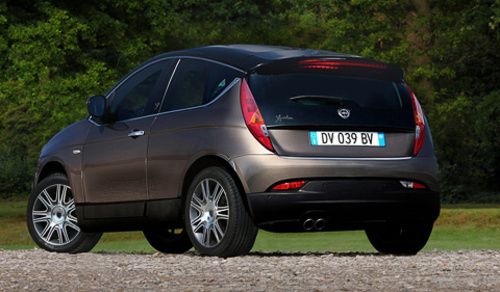
The Lancia product offensive continues. Following news of the Thema, Grand Voyager, Flavia Concept and Flavia Cabrio Concept comes a first look at the brand new Ypsilon.


Although it has been around in various guises since 1996, the Ypsilon will be unfamiliar to most people in the UK and Ireland, simply because Lancia abandoned those markets years ago.


However, this next generation model is going to be built in right-hand drive form too, albeit badged as a Chrysler.


The Ypsilon’s thing is supermini luxury; rather a small niche, but that theme continues unchanged. Luckily, what has been altered is the awkward styling that blighted previous versions. Sure, it’s still distinctive, but it just works a lot better. And now, for the first time, the Ypsilon is a five-door.


Buyers will be able to choose from three trim levels - Silver, Gold or Platinum - and four engines.


The two petrol options are a 68 bhp (50 kW / 69 PS) 1.2 8V Fire unit, or an 83 bhp (62 kW / 85 PS) 0.9 litre two-cylinder TwinAir motor. Diesel devotees are catered for by a 93 bhp (69 kW / 95 PS) 1.3 MultiJet II turbodiesel engine, and there’s also a dual-fuel version of the 1.2 litre petrol that can run on LPG.


To minimise CO2 emissions and fuel use, all Ypsilons come equipped with a start / stop system, gear shift indicator and Goodyear EfficientGrip low rolling resistance tyres.


After its debut at the Geneva International Motor Show, sales of the Lancia Ypsilon are set to begin in June for key European territories. The Chrysler Ypsilon meanwhile will arrive in British and Irish showrooms from September.


Giving customers peace of mind will be a longer warranty period, up from the usual 36 months to 96 months. Available across the entire Lancia range, the newly lengthened warranty will cover almost everything on the car, and there won’t be any mileage restrictions. It will be offered first in Italy, Portugal and Spain from April onwards, with other European markets adopting it later in 2011.


Related posts:

Chryslers become Lancias

Fiat Freemont unveiled

Journey becomes a Fiat

Fiat 500 TwinAir arrives

No UK return for Lancia

Europeans in Detroit

Monday, February 14, 2011

Chryslers become Lancias

It might upset some Lancia traditionalists, but the marque’s initial Chrysler-based models have been revealed ahead of their debuts at the Geneva International Motor Show.


First up is the Thema, which is a badge-engineered Chrysler 300.


Resurrecting the Thema name - last used in the mid-1990s - this new edition focuses on comfort and luxury. For example, Lancia is claiming best-in-class noise levels, thanks to various acoustic panels and laminated glass all round. Recent Chrysler interiors haven’t been the brand’s strong point, but the Thema’s cabin is said to feature soft-touch materials, redesigned seats, wood trim inserts and optional leather upholstery.


Available in either Gold or Platinum specifications, both come with Uconnect telematics as standard. Based around an 8.4” touch screen, the system controls climate control, telephone and audio functions, as well as the Garmin satellite navigation that is included with the Platinum version.


Of course, being a reworked Chrysler 300 means the Thema is rear-wheel drive, a factor that will better equip it to compete with the established rivals from BMW, Mercedes-Benz and Jaguar.


Three engine choices are on offer. For petrol fans there’s the Chrysler Pentastar 3.6 litre V6 which produces 292 bhp (218 kW / 296 PS) and 353 Nm (260 lb/ft) of torque. Connected to an eight-speed automatic transmission, it’ll accelerate the Thema from rest to 62 mph (100 km/h) in 7.2 seconds, before taking it up to a top speed of 142 mph (230 km/h). Combined cycle consumption isn’t too bad at 34.0 mpg (8.3 l/100km), while CO2 emissions are 199 g/km.


However, the majority of buyers will probably opt for either of the two diesels. Both are VM 3.0 litre V6 units and are paired with a five-speed automatic gearbox. The difference is in their outputs, with one generating 187 bhp (139 kW / 190 PS) while the other has 220 bhp (164 kW / 224 PS).


Sales of the new Lancia Thema are due to begin in October across continental Europe. The Chrysler nameplate remains for the UK and Ireland, though.


Replacing the aged Phedra MPV is the Lancia Grand Voyager. Based on the Chrysler Grand Voyager (otherwise known as the Town & Country in North America), the lack of a name change highlights what little alterations have been applied during its metamorphosis into a Lancia.


Available in Silver, Gold or Platinum trim levels, specification includes the Uconnect system, a nine speaker audio set-up and a rear reversing camera.


The existing 2.8 litre common rail diesel from the Chrysler Grand Voyager is carried over. With 161 bhp (120 kW / 163 PS) and 360 Nm (265 lb/ft) of torque, combined cycle consumption is 33.6 mpg (8.4 l/100km) while CO2 emissions are 227 g/km. As would be expected, performance is respectable rather than electrifying, with a 0-62 mph (100 km/h) time of 12.8 seconds and a 115 mph (185 km/h) top speed.


Alternatively, a 3.6 litre V6 petrol engine will be offered. Delivering 279 bhp (208 kW / 283 PS), it comes with a six-speed automatic transmission as standard. Naturally, fuel economy is considerably worse than the diesel option manages, averaging just 22.9 mpg (12.3 l/100km).


Finally - for now at least - are the Flavia Concept and Flavia Cabrio Concept. Essentially just a pair of rebadged Chrysler 200 models, Lancia is saying both could have European launches within six months - a timescale that doesn’t seem overly ambitious. After all, how long does it take to swap over the front grille and lights?


Related posts:

Fiat Freemont unveiled

Journey becomes a Fiat

No UK return for Lancia

Europeans in Detroit

Wednesday, January 19, 2011

Lancia Stratos Sport Cars Concept

Lancia Stratos Sport Cars Concept
In November 2010, forty years after the Stratos’ presentation at the Turin Motor Show, the New Stratos was publicly presented for the first time at the Paul Ricard Circuit – the legend returns. The legendary Lancia Stratos HF was without a doubt the most spectacular and successful rally car of the 70s. With its thrilling lines and uncompromising design tailored to rally use, the Lancia Stratos not only single-handedly rewrote the history of rallying, it won a permanent place in the hearts of its countless fans with its dramatic performance on the world's asphalt and gravel tracks - a performance which included three successive world championship titles.
The latest  Lancia Stratos Sport Cars Concept not but single-handed rewrote the account of baiting, it advanced a perm place in the affections of its innumerous fans on its dramatic production on the world’s mineral pitch and gravel tracks – a execution which admitted 3 sequential world backup titles. The centrepiece of the fresh 2010 Lancia Stratos are the 4.3L, light alloy V8 locomotive of the Ferrari F430 Scuderia, which speeds the high tech sports car to a accelerate of 200 kilometres per hour in 9.7 seconds.
Lancia Stratos Sport Cars Concept
The goal for the development of the Lancia Stratos HF's successor was to once again create a mid-engine sports car with a short wheelbase, low weight and superior agility. Just as the Lancia Stratos, with its Ferrari Dino V6 engine, was nevertheless a distinct sports car in its own right, the New Lancia Stratos Sport Cars Concept is also a distinct development, using components of the Ferrari 430 Scuderia. Almost all of these components have been modified and, as necessary, customized to their new purpose. However, it should also be emphasized that the Ferrari Scuderia already sets the standard amongst the current super sports cars and, as such, provides an excellent basis for further development.
The high execution locomotive which absorbs its intake air by the roof spoiler’s face openings, back-number equipped on afresh control social unit and a high-performance exhaust by Capristo, including multiplex and sports car exhaust; it delivers 540 horsepower and provides a torque of across 500 Land of Enchantment.
Lancia Stratos Sport Cars Concept
The aluminum chassis was shortened by 20cm and welded to a roll cage made of 40mm-thick FIA FE45 steel. This method significantly increases rigidity, and this, combined with the shifting of the center of gravity towards the front, provides the basis for the vehicle’s extraordinary handling characteristics. Both the body – which is 33cm shorter than the Scuderia’s – and the interior are constructed entirely of carbon fiber and aluminum. All of the body components of the shell and interior are made of visible carbon. This places especially high demands on the quality of the processing, which was accomplished by Re Fraschini.
Since the first blurry pictures of New Lancia Stratos Sport Cars Concept appeared on the Internet in the summer of 2010, sports car enthusiasts and motorsport fans from around the world have been waiting impatiently for confirmation of whether the successor to the legendary Lancia Stratos really drives as impressively fast and with as much agility as appearances would suggest.
Lancia Stratos Sport Cars Concept
Finally, the steering has been converted to electro-hydraulic, the new smaller carbon steering wheel displays the exact shift points via differently colored LEDs and the paddle shifters are from the Ferrari 430 racecar. The New Lancia Stratos Sport Cars Concept, like the racing version of its predecessor, has been extensively geared – down to every last detail – towards lightweight design and performance. Not surprisingly, the specification sheet was therefore extremely ambitious in this regard as well.
Lancia Stratos Sport Cars Concept

Monday, May 24, 2010

Tuesday, May 18, 2010

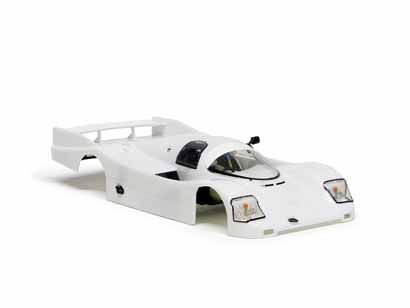
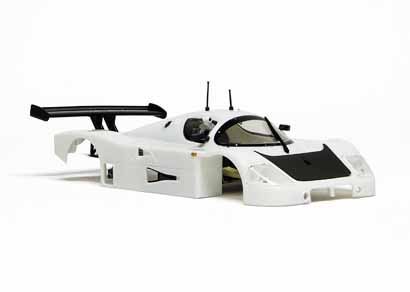
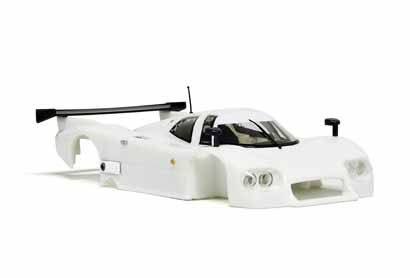
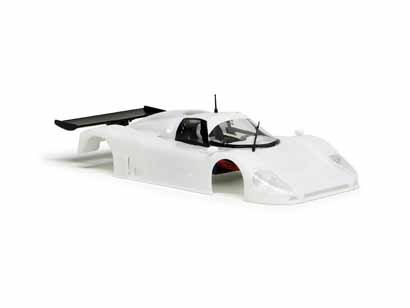
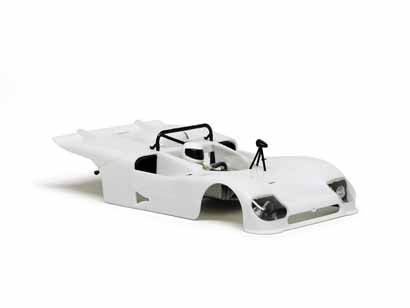
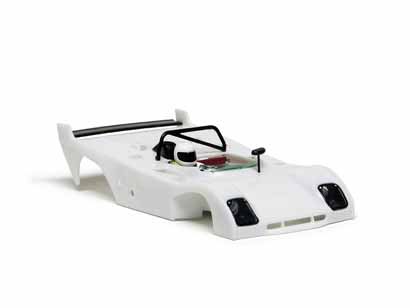
New Slot It body kits

Some new Slot It body kits.

CS03b - Porsche 962C Body Kit


CS05b - Sauber C9 Body Kit


CS08b - Lancia LC2 Body Kit


CS07b - Jaguar XJR9 Body Kit


CS11b - Alfa Romeo 33/3 Body Kit


KS01b - Ferrari 312PB Body Kit

Sunday, April 25, 2010

No UK return for Lancia

First of all, Lancia had intended a return to the UK market in Summer 2008, spearheaded by the then new Delta. That plan was delayed for a year because the dealer network wasn’t ready, and the company recognised it also needed a second model for those dealers to sell.


Then the brand’s re-launch was postponed indefinitely, a victim of the prevailing tough economic conditions.


Now, following the presentation of Fiat Group Automobile’s 2010-2014 Business Plan, it seems almost certain that Lancia will never return to the UK.


That’s because the Chrysler and Lancia ranges are to be fully integrated in Europe, a consequence of Fiat taking a 20% stake in Chrysler back in June 2009. It has also been decided that all of the unified range will be branded Lancia in continental Europe, while the Chrysler badge will be used for the UK and Ireland.


As well as the Delta, the Lancia line-up currently consists of the Ypsilon supermini, Musa small MPV and Phedra MPV (part of the Citroen C8, Fiat Ulysse and Peugeot 807 family).


Chrysler meanwhile only sells the 300C saloon and Grand Voyager MPV in the UK at present, the PT Cruiser and slow-selling Sebring no longer being offered.


The combined range will look like this:


  • Ypsilon continues, with an all-new five door model scheduled for 2011.

  • Delta remains in production, but will be joined in 2012 by a new-model compact saloon and station wagon.

  • Musa will remain on sale until 2012, with no replacement planned.

  • Phedra is to be phased out during 2010.

  • 300C will be replaced by a new version in 2011.

  • Grand Voyager remains on sale, to be replaced in 2014.

  • 2013 will see the introduction of a large saloon (primarily for North America) and a crossover model.


Fiat has set a target of 295,000 Chrysler / Lancia sales across Europe in 2014, to be handled by over 1,000 dealers.

Tuesday, February 23, 2010

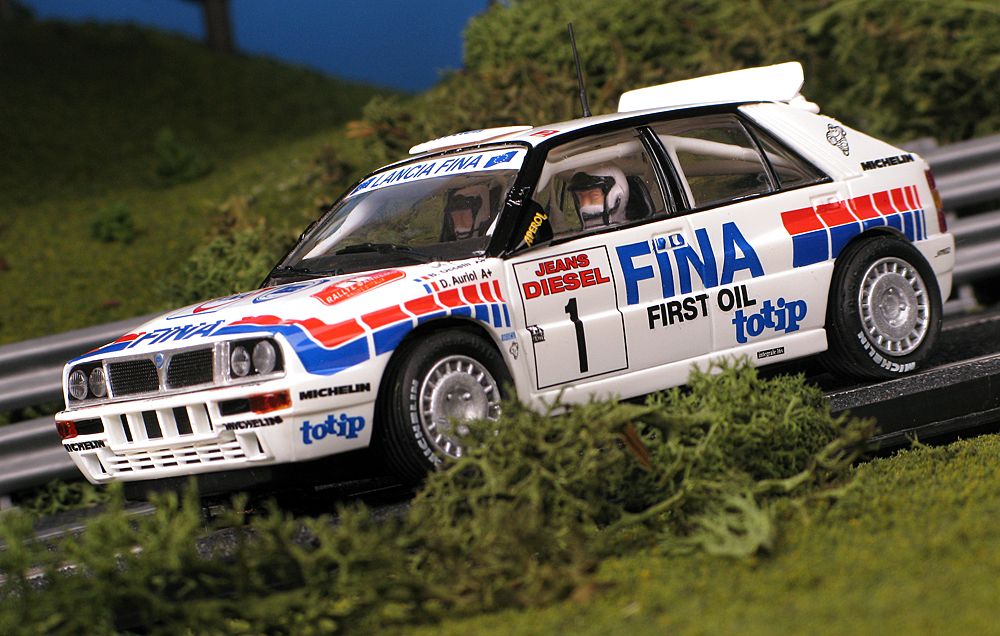
Lancia Delta Integrale

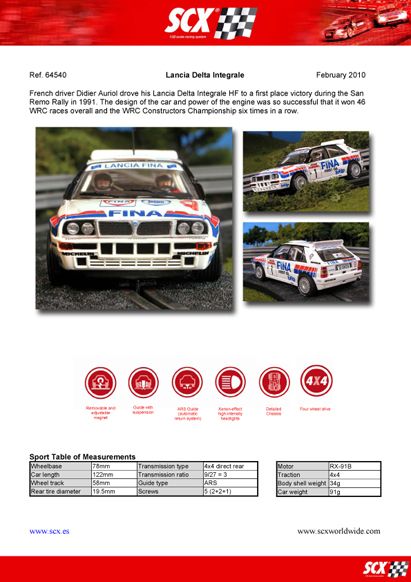
A new SCX Lancia Delta Integrale is coming soon.

Sunday, January 31, 2010

Europeans in Detroit

Interesting to see a couple of re-badged European cars on display at the 2010 Detroit show earlier this month.


Following its takeover by Fiat, Chrysler clearly couldn’t be bothered to do too much with the Lancia Delta, not even going to the trouble of changing its model name. A minor tweak to the grille seemed to be enough.


The Chrysler Delta.  Or is it?


Buick meanwhile appeared to make a bit more of an effort with the Regal, its version of the Vauxhall / Opel Insignia. The GS shown featured a 252 bhp four cylinder turbo engine. Not quite the 321 bhp that the six cylinder Insignia VXR / OPC has, but it should still be rather quick, with a 0 - 60 mph time below six seconds.

Monday, December 7, 2009

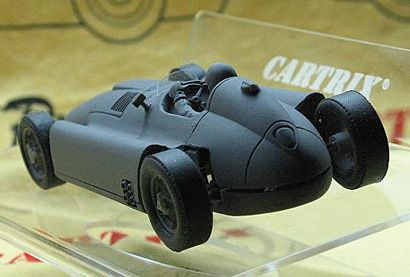
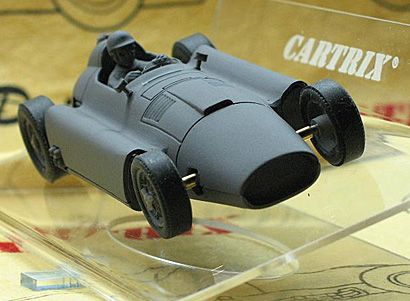
New Cartrix Lancia-Ferrari D-50


Coming early in 2010 from Cartrix:
965 1956 Portago ( E ) Collinns ( USA ) #4 Lancia-Ferrari D50
966 1956 Fangio ( AR ) #1 Lancia-Ferrari D50

Monday, August 10, 2009

Tata Motors it's full determination to get well-known studio Pininfarina

Studio Pininfarina

Family Pininfarina owning well-known design company Pininfarina SpA, has employed Italian Banca Leonardo for sale of a control package of the firm, has informed a source in the company. As informs Reuters, sale of a package of the developer of design for various models Ferrari, Maserati, Rolls-Royce, Cadillac, Jaguar, Volvo, Alfa Romeo and Lancia is a transaction part on settlement of debts Pininfarina before banks.

Company Pincar which supervises family actives, at the same time, a family completely does not leave completely with Pininfarina SpA, and reserves the right to itself the full participant of board of directors. As the future investors are called French financier Vincent Bollore and Indian Tata Motors Ltd. In a consortium with Fiat SpA.

The studio of autodesign Pininfarina is created in the thirtieth years of last century and is since then family business. In the company work about 3 thousand persons. The company has started to experience financial difficulties still couple of years back. So, in April, 2008 Pininfarina has officially informed on the intention to sell 25% of actives. The Italian company planned to direct a part of this money to firm Bollore for payment of creation of an electromobile.

Related Posts: Ferrari

Tuesday, July 28, 2009

Italians soon will show new generation Lancia Ypsilon

Lancia Ypsilon

The Italian mark Lancia widely popular in the past is in demand today basically in the local car market.

Muffled positioning, the narrow and illogically built lineup, the overestimated prices — all it has led to that in many countries have simply ceased to buy production Lancia. But Italians still hope to break a situation. Including thanks to new generation of small hatchback Ypsilon.

The car will be realised on platform Gamma which also use Fiat Grande Punto and Alfa Romeo MiTo. Certainly, Lancia will receive a corresponding stuffing: petrol motors 1.4 (78 and 95 forces), 1.4 T (120 and 150), diesel engines 1.3 JTD (90) and 1.6 JTD (120). In the chassis racks McPherson in front and braided a beam behind will be applied.

While it is not known, on which the motor-show debuts new generation Lancia Ypsilon. The premiere should be loud, after all the B-class hatchback is the most bought model of the company. Apparently, car presentation will date for a scale Frankfurt motor show. But it is our thoughts, and Italians — a question here is how will arrive.

Sunday, April 26, 2009

New SCX Lancia Delta


Wednesday, February 20, 2008

Lancia Delta Revealed

Over two weeks ago Lancia released several official images of the upcoming Delta, with a short press release. Today, Lancia decided to reveal more with an 'extended' press release that covers almost everything you need to know about the hot hatch.


The Delta is 4.5 metres long, 1.8 metres wide, 1.5 metres high, and has a wheelbase of 2.7 metres that allows for plentiful interior space. The exterior appears very contemporary, particularly with the front nose that is exceptionally aggressive.

At launch, buyers can select between the 120 hp 1.4 litre and 150 hp TurboJet petrol engines, or the 1.6 litre 120 hp MultiJet turbodiesel engine. The engines are mated with a 6-speed manual, robotized, or automatic gearbox. More engines will be added in the future, including the 2.0 litre 165 hp MultiJet, 1.9 litre 190 hp Twinturbo MultiJet, and the all new 1.8 litre 200 hp Di Turbojet (petrol).

The car is highly customisable in respect of exterior and interior looks. Other features include climate control, Blaukpunt radio, Hi-fiBose® sound system (optional), CD and MP3 player, and a new satellite navigation system.

Press Release

Lancia Delta, global premiere

Delta, a historical name representing one of the peaks of Lancia's automotive history but also a mathematical symbol which represents change, difference, evolution.

In this sense, Lancia Delta is one of the first cars in a new Lancia philosophy. A unique and original position, synthesis of two fundamental Lancia brand values, the elegance of style and the audacious innovative nature, which inspires every marketing and communication activity.

This is the first totally new vehicle in the second Lancia centenary, the Delta. Blessed with an unrivalled design faithful to the innovative calling of the brand. For the product features and international development work backing the launch predicted for the middle of 2008, Delta represents a turning point in Lancia's history and will contribute significantly to the strategic plan.

Perfect stylistic balance for the Lancia of the future.

The first advanced “delta” is represented by the capacity to reconcile the traditional elegance of Lancia with original architectural solutions, which for the first time combine harmoniously the plucky personality of a sport vehicle with the on-board comfort of a saloon.

Designed by the Centro Stile Lancia, the new Delta brings into the future the tradition of the “great” Lancias – such as the Aprilia, Appia, Fulvia, Beta, Prisma, Dedra and the Lybra. Back in the fore-front is the medium sized saloon. Delta is 4,5 metre long, 1,8 metre wide and 1,5 metre high. Measurements, which when coupled to a wheelbase of some 2,7 metres, guarantee an extraordinary habitability for it's segment.

The nose of Lancia Delta is aggressive and important, emphasised by the volume of the mudguards and characterized by an imposing radiator grill, brand-name symbol. A harmonious convergence of the well sculpted bonnet and the fluid lines of the wheelhouse, while the dynamic aspect of the vehicle is underlined by the broad air intake, witness to the fiery temperament of the Lancia Delta. Rendering the vehicle even more sporty and technological is a set of innovative spotlights, true high-tech engineering jewels, framed by a line of LED's.

Sidewise, the Lancia Delta shows great dynamism, with a high beltline and trapezoidal rear pillars, a natural support for the nautically inspired “flying bridge” roof. Contributing to the smooth lines of the vehicle are both the chromed moldings - perfectly integrated in the weatherstrips emphasising the “flying bridge” – and the opaque grey chromatic contrast in the lower-part of the door sill, which recalls the roof's two colours, in clear homage to the Lancia tradition.

The broad glazed roof surface – with a specific diverging development of the uprights towards the rear area – terminates in the spoiler, perfectly integrated with the original wraparound backlight and the modern conception which does away with the perimeter structure. And the same stylistic originality can be found in the rear, where the vertical LED headlamps, an expression of advanced technology, further enhance the elegant Lancia Delta lines.

A fascinating and innovative range, that finds a perfect balance in the interior – quiet, bright, rich in luxurious materials and harmonious colours – guaranteeing unrivalled comfort. As shown by the sound absorbing roof panel which ensures a quiet drive, while the generously dimensioned side windows provide plenty of light, together with he optional extralarge sunroof which takes up 80% of the total surface. An exclusive wide and protective space is born: like the interior of a Lancia car should be. Fully in line with the Lancia tradition, the front area is characterized by soft surfaces and linings in high-quality material. From leather to Alcantara – and a “important” dashboard made with Benova®, an innovative material and noble polyurethane base product which features the same tactile and visual sensations as real leather (the product is registered by Benecke-Kaliko and has up to now been used in top of the line vehicles, such as the Maserati).

Furthermore, the central console is particularly attractive, as the “ideal technological plate” seems to “fluctuate” upon the surface below. This ideal overlapping is further emphasised by the original white lighting which spills out of the console and illuminates the buttons of the original three-dimensional form. In addition, all driving controls - console, driving-wheel, climate controls and the “infotainment” application – have been given the same chromatic treatment and are made of the same materials, with a metallic and technological effect which enhances the entire dashboard, to underline their important function.

The unmistakable Lancia class can be seen in the chromed detail on the controls: from the climate control and radio dials, to the door handles and console controls. At the same time, the steering-wheel of the new Delta recalls, in a contemporary key, the historical “four spoke”, and the same applies to the elegant gearshift knob.

Comfort and pleasant well-being also for those who recline on the rear seats. Not only because they are real armchairs which provide excellent comfort, but also due to the rear habitability of the new Lancia Delta (which has a wheelbase of over 2,7 metres) being among the best in the range. The interior becomes a living room, thanks to the sliding rear seat with adjustable back, which further increases the capacity of the already spacious boot. By tilting or backing the seat, total relaxation is on hand, full extention becoming available as on business class seats of intercontinental flights.

Innovative technology for maximum on board comfort

The highest expression of sought-after Italian exclusivity, the Lancia Delta compartment confirms itself as a veritable living-room able to accommodate passengers in a unique environment for class and comfort, as well as being highly technological.

Thanks to a collaborative effort with the best partners in each sector, the Lancia Delta offers the most advanced accessories and systems in the entertainment field: for example, you can experience the exciting musical quality of the Blaukpunt radio, or the Hi-fiBose®sound system (optional) with CD and MP3 player complete with controls on the steering wheel. Otherwise, you can access the innumerable features of the Blue&Me®, a system made in collaboration with Microsoft, fitted with: Hands-off and Bluetooth® interface and advanced voice recognition, USB port, MP3 player and SMS interpreter (also available in SatNav version).

Lastly, debuting on the Lancia Delta is a brand new satellite navigation system. Designed in cooperation with Magneti Marelli, this innovative device offers high multi-media performance, great ease of use, and perfect integration of a host of features in one system: from USB interface to voice commands and map management through SD cards on the high-definition screen.

Engine and mechanics with elegance and temperament


The Lancia Delta expresses it's cardinal values – elegance and temperament – even in the engines and mechanics. Before anything, the “temperament” of its petrol and diesel power units are distinguishable by the innovative technology and performance. All turbocharged and coupled to 6-speed transmission (manual, robotized or automatic). The Lancia Delta engines available from launch will be three: 1.4 litre, 120 HP and 150 HP TurboJet (both petrol) and the 1.6 litre 12° HP MultiJet turbodiesel (Euro 5), which will also be coupled to an advanced robotized transmission. To these will be added 2 new engines: the 2.0 MultiJet with 165 HP and the 1.9 Twinturbo MultiJet with 190 HP.

Subsequently the range will be completed by another innovative engine: the 1.8 Di Turbojet with 200 HP (direct fuel injection mated to a modern automatic 6-speed gearshift). All Euro 5, these three units confirm the Lancia brand as an industry standard in terms of technology and innovation for the entire automotive panorama.

Elegance in the forms and materials, but also “elegance” in their relationship with the outside world. As regards the environment, the Lancia Delta by using diesel engines, anticipates the limits imposed by the future Euro 5 norms. This characteristic surely adds another “delta” on top, in comparison to the competition.

Lastly, the engine performance is tested mechanically and optimized for comfort and handling via the use of technical solutions unique in their field. Starting with the ESC(Electronic Stability Control), an evolved system stability control, which in comparison to the systems available up to now, adds numerous and important functions, such as for example the LTF (Linearization Torque Feedback) which noticeably improves the road handling feel curves, especially at high-speed; and the TTC (Torque Transfer Control), an innovative function which – by simulating electronically the presence of the self-locking differential – improves traction on turns, noticeably diminishing understeer and ensuring more dynamicity in the drive.

It's worth mentioning that the innovative control system ESC always intervenes in a discreet manner thanks to the DST (Drive Steering Control). In fact, the “active electronic steering wheel” already carries out the adjustments and controls the oversteer on slippery surfaces.

Still at the forefront of technological advances, the Lancia Delta adopts the SDC (Synaptic Damping Control) suspension, which, on one side improves the ease of shifting gears, in particular elevating the filtering on uneven surfaces; on the other, it exalts yet further driving pleasure by improving the road handling under any conditions (the system actively regulates the stability depending on the driving surface and driving technique).

Completing the set-up is a semi-automatic parking system SPS (Semiautomatic Parking System) which guides the steering, leaving to the driver the task of accelerating and braking to complete the manoeuvre. The HALF (Haptic Line Feedback) system, helps by acting on the steering, and warning the driver if the vehicle has slipped out of gear.

In synthesis, all these devices have the task of simplifying and improving the driving experience, so much so that – taken all together – they are part of the all-embracing concept of “VIP Driving”.

More than a 1.000 customizations “made to measure”


Aimed at a demanding clientele who love to be distinct, the new Delta combines stylistic elegance with sought-after materials and care in the details, as well as those particular innovations and sporty features, which historically have distinguished the Lancia cars for over a century. It is precisely in the combination of colours, cloths and materials that the model's exclusivity is born. Suffice to say that the client can chose over a 1.000 personalizations. An extraordinary range born by combining 3 outfittings, 4 different seat upholsteries, 3 interior colours, 5 types of alloy wheels, 12 chassis colours and 12 “two-tone” matchings.

Therefore, whatever the level of personalization, the Lancia Delta is always fascinating and original, with full respect for the world famous Italian elegance. The model renews the Lancia tradition, by playing with contrasts, highlighting the importance of detail and artisan work, and offering interiors with sough-after performance, all with the maximum personalization of the different outfits. This is why, every version of the new car is a truly “made-to-measure” suit.

Delta: a name which has entered international motoring history

The Lancia Delta is born in the autumn of 1979, in 1980 it is voted “car of the year” by a jury of specialized journalists. The bodywork has a strong personality, the engine is high-performance, and the model represents a true generation leap, both in terms of the global concept of the vehicle, and for its engineering, style and quality. It's not by chance that the public finds in the delta excellent performance, care in the finish and the generosity of the materials typical of the great Lancia's.

The two-volume body-line owes its debt to the pen of Giorgetto Giugiaro, who gives life to a trapezoidal form with very angular contours. Among the original features are the front and rear bumpers which include the grills made in polyester resin reinforced by glass fibres.

The mechanical architecture is made-up by a front-wheel traction with transverse engine, suspension with four independent wheels, braking system with two crossed circuits and rack and pinion steering. There are two power units available on launch: 1.3 with 75 HP and a 1.5 with 85 HP. Both are fitted with a cam shaft controlled by a toothed belt. The cylinder head is a light alloy casting.

Taken as a whole, the Delta comes across as a compact and elegant car, less than 4 metre long. We are in 1979, and the Delta, a small family car, offers the accessories of a luxury car (including, for example, electric windscreen wipers). The idea of a vehicle with innovative style and features typical of top of the range models, is introduced by Lancia as a compact saloon which received immediate widespread approval from the public and critics alike.

Began in Lingotto, a factory in Turin, production of the Delta is then transferred to the Chivasso plant, which is host to most advanced spray systems in the world. An electronic control system for working on the body and an automated plant which ensures total quality of sub-assemblies. From here roll out the “personalized” LX versions, and in 1982 the Delta GT with a 1.6 105 HP engine. The car is fitted with four disc brakes with brake servo. Top-speed is 180 km/h.

In 1983, four years after the debut, the Delta HF Turbo is born. It's the first standard Lancia car with turbo. The engine is still 1585 cc, but it delivers 130 HP, for a top speed of 190 km/h.

Three years later, in 1986, the model range is renewed and broadened: with a Delta GT electronic injection 108 HP, 2.0 turbo 80 HP, HF Turbo injection (140 HP) and HF 4WD. The latter, together with the Prisma 4WD, marks the entry of Lancia in the 4WD saloon segment. It is fitted with a two litre 165 HP engine (top speed 208 km/h) and advanced mechanics. The traction system includes front differential, epicyclic central differential which distributes torque asymmetrically (56% to the front axle and 44% to the rear), a viscous Ferguson joint applied to the central differential and a Torsen (“torque sensing”) differential at rear, an intelligent device which distributes torque between the two wheels depending on adhesion without completely locking the two half shafts. In this way the Delta HF 4WD can transfer to the ground all the engine power in the correct manner. The result is a vehicle with great motricity on low-adhesion surfaces and excellent road handling at high speeds. In subsequent years, the all-wheel drive Delta is made even more appealing by a series of styling and technical improvements, especially dictated by demands from the world of competition. Between 1987 and 1992 the Delta sport models are six time winners of the World Rally Championship

The Delta was in production from 1979 to 1994. Almost half a million units were produced.

Thursday, June 28, 2007

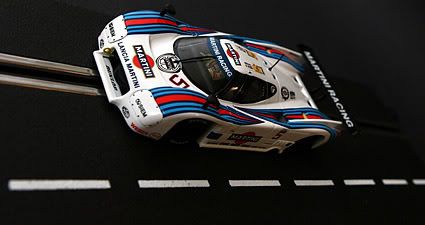
Slot.It Martini-review


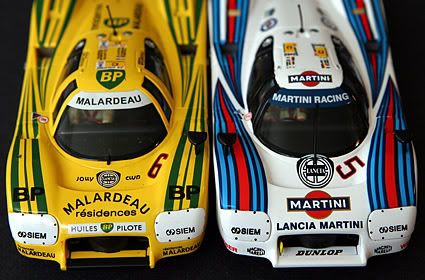
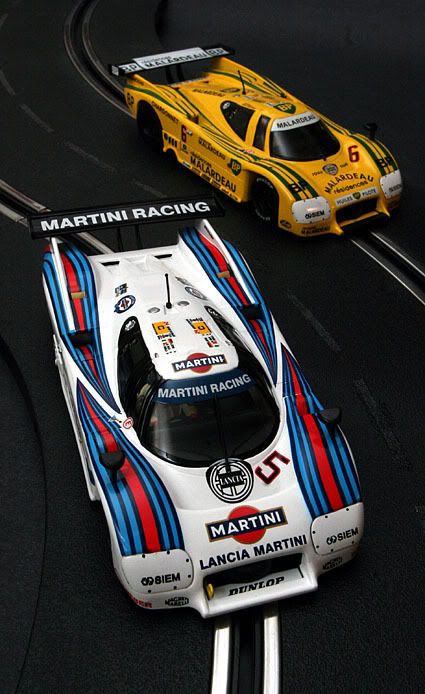
The hits keep coming from Slot.It. The newest release is surely a slot car that needs little in the way of introduction, the Lancia Martini livery will be the "one to buy" for many slotters.

There are no breaks in the tampo printed stripes along the sides and top of the body. And none of this will come as a surprise to anyone familiar, as most are, with Slot It's products. There are no blemishes on the outside of the body of this car. Inside the body, near the front wheels, there is a bit of over spray, but you can't see this unless you remove the body. So it's another cosmetically wonderful slot car from Maurizio.

The Martini car has the black paint between the windows that the BP-Malardeau lacked. This detail isn't something that really took away from the first release of the Lancia, but it's nice to see this black tear drop shape around the greenhouse.

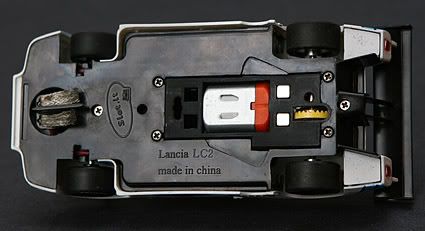
Thankfully for everyone out there who's a fan of Slot.It cars, Maurizio is never content to just release another car without trying to improve on his product. The Lancia body was supposed to have been lightened a bit, but both the Malardeau and the Martini weigh the same (22 grams), no big deal, since the real change can be seen when you flip the car over.

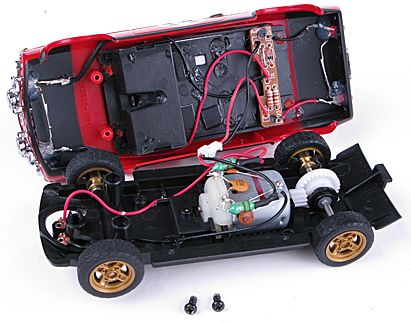
And there you have it. Not only the 21.5k "orange endbell" high torque motor, but the cut outs for an angle winder pod.
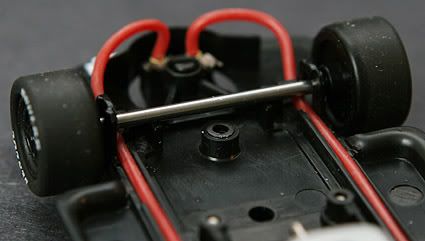
The changes aren't limited to the pod. The wires are routed under the front axle via the same channel design used on all recent releases. A great feature that is now a standard on new releases. The front wheels on this car didn't turn easily or touch the track on this car out of the box. Removal of the "cups" that are under front fix this with not too much trouble.
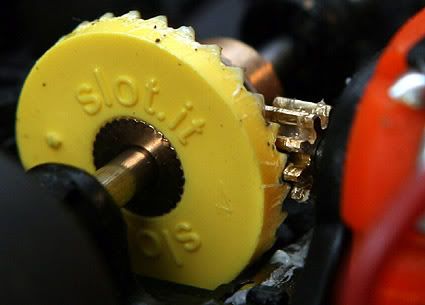
The car has the usual 28 tooth crown gear which now has a Slot.It logo on it. One of the very noticeable differences between the first Lancia release and this one is how much quieter this car is than the last car. Like the final black and red Nissan 390 and the McLaren this car is whisper quiet. I have a theory that in addition to a logo being added a slight change might have occurred in the gear mold yielding a gear that meshes just a bit better. One feature that the McLaren does have, however, is larger holes that the heads of the pod screws sit in. So, when you loosen the pod, the heads of the screws have plenty of room to move around. This small change was not incorporated into the new chassis made for the latest Lancia. The benefit of larger holes for the heads of the screws might be doubted by some, but personally, I'd like to see this small change made in future releases. When it comes to pod movement, every little bit helps.

On track performance at the East New York Raceway wood track yielded these times:

6.229 stock tires, tight pod - the car feels too tight and twitchy around the corners.

5.9 stock tires, loose pod - car feels much smoother, and even with the stock tires the car is much easier to drive.

5.5 with the provided S2 tires

5.4 with Technical Editor Robert Livingston driving, in a different lane on the track.

A note about times. Times on this day were slower than normal, cars that normally were sub-5 second racers barely cracked that barrier around the 61 foot track. We'd expect this car to be slightly slower than the 956 and Nissan, and much slower than the McLaren (which still stands alone as the fastest Slot.It out-of-the-box, in testing by Slot Car News).

The new orange endbell-driven car is much faster down the straights than the older 25k powered Malardeau Lancia. Also, the car can be driven much further into the corners, because of the better brakes on the 21.5k. Gear ratio and weight are the same.

You just can't go wrong with any of the Slot.It cars. It's nice that there aren't really any negative surprises with their cars. You put them on the track and they fly around as fast as your driving ability will allow. The Martini Lancia LC2-84 should sell briskly because it's "one of those" liveries that many slotters collect.

Dave Kennedy
Publisher, Slot Car News